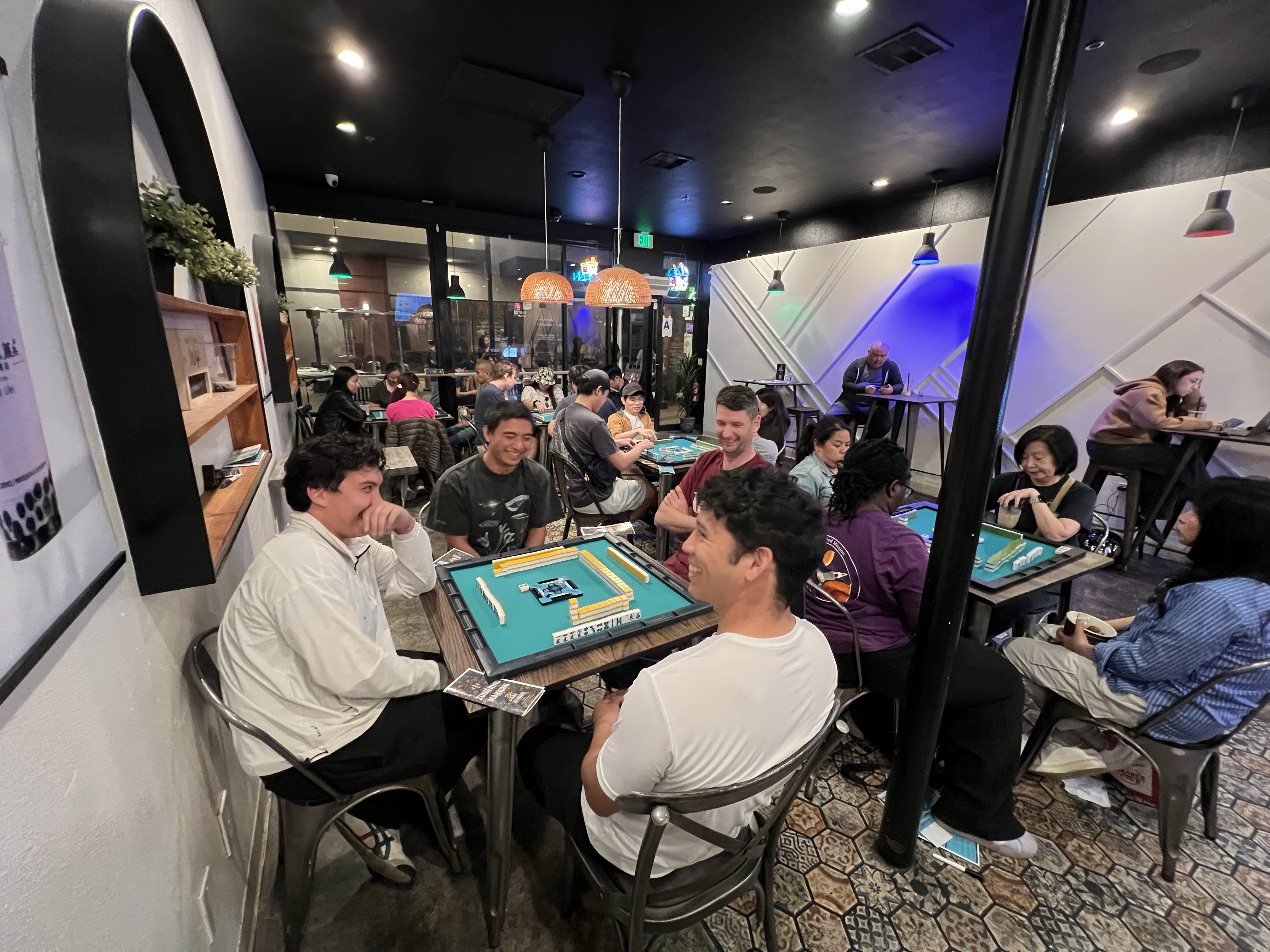
The following is a reflection on my impression of the strategic space of Riichi, MCR, and Zung Jung (ZJ). It comes from conversations I had with Reggie in the San Diego Mahjong Club and with Lily from the Portland Mahjong Club.
I’d describe the strategic space of Riichi, MCR, and ZJ this way:
To me, Riichi Mahjong isn’t really a pattern-building game, even though it technically has patterns. The strategic focus feels somewhere else entirely. Most of the big decisions are about things like not dealing in, whether to open your hand, whether to Kan for more Dora, whether to push or fold, and whether to Riichi or stay dama.
Pattern building feels secondary because of how the game is structured. The patterns themselves are relatively undervalued, while Dora are heavily overvalued. So instead of thinking “how do I build this specific hand,” you’re often thinking “how do I incorporate Dora into what I already have?” Unless you’re going for something like a Yakuman, there just isn’t much incentive to deliberately chase patterns.
Mahjong Competition Rules (MCR) feels like the opposite extreme. It’s pattern building pushed to the limit. Most of the strategy is combinatorial—looking at your hand and figuring out what patterns are even available to you, then navigating toward one of them.
A big part of the skill is knowing when to commit to a pattern and lock it in versus when to stay flexible and let a tile go so you don’t trap yourself too early. Defense exists, but it’s more of an afterthought. You’re not punished that harshly for dealing in, and it’s genuinely hard to read opponents because there are so many possible patterns they could be building.
Then Zung Jung Mahjong sits in this really interesting middle space.
It’s definitely a pattern-building game like MCR, but there just aren’t that many patterns. Because of that—and because ZJ doesn’t impose many restrictions beyond the core Mahjong rules—the whole game starts to revolve around a different question: do I play for speed or do I play for value?
That tension doesn’t really exist in the same way in the other two systems. In Riichi, you can’t really “build toward” value unless you already have Dora, and the emphasis on concealed hands limits how fast you can realistically go. You do have the option of All Simples (Tanyao), but that’s about it. ZJ comparatively has All Simples, All Sequences, and Chicken Hand. Fast hands in Riichi tend to come from what you’re dealt, not something you construct. In MCR, fast hands basically don’t exist at all because of the 8-point minimum—most hands naturally go deep into the wall.
Defense in ZJ also lands somewhere in between. It’s not as critical as in Riichi, but it matters more than in MCR. There are also some interesting reads you can make that feel different from Riichi.
For example, last night I had a moment where it didn’t look like I was going to win the hand. So instead of pushing or folding, I started looking at one opponent’s discards and melds and trying to gauge what kind of hand they were building. It looked relatively small, and I didn’t want to risk something big from someone else where I’d have to pay 25 points at least no matter what, so I began evaluating my opponent’s range based on their discards and trying to deal into their hand as it would lead to me paying less points than if someone won a big hand. ZJ’s “everyone pays” system really adds pressure over time, especially when people start playing big hands, so not winning begins to compound.
Another thing I’ve noticed is that ZJ lets you import ways of thinking from other Mahjong systems. I found myself thinking in a very Riichi-like way at certain points—especially defensively. At one point, two opponents had melds that suggested very large hands, and I basically started playing as if there were multiple Riichi declarations on the table. That shift in mindset worked out—I tightened up, avoided risk, and ended up winning the game.
So ZJ feels flexible in a way the others aren’t. It doesn’t lock you into one way of thinking—you can move between styles depending on the situation.
Leave a Reply